The projected population will increase soon. On the other hand, the available carbon
elements are in limited conditions, while the need for building materials is always there. These two things impact architecture, such as population growth affecting space requirements and increasing material demand. Thus, the problems above are necessary to study. The biomimicry approach that has been here for a long time needs to look at as a science to produce solutions. Life in nature today is proof of the ability to survive in various environmental conditions. Indirectly, they have gone through the research and development stage to stay alive, so in other words, they don’t become extinct. Problem-solving with a biomimicry approach can be done by adapting or replicating solutions
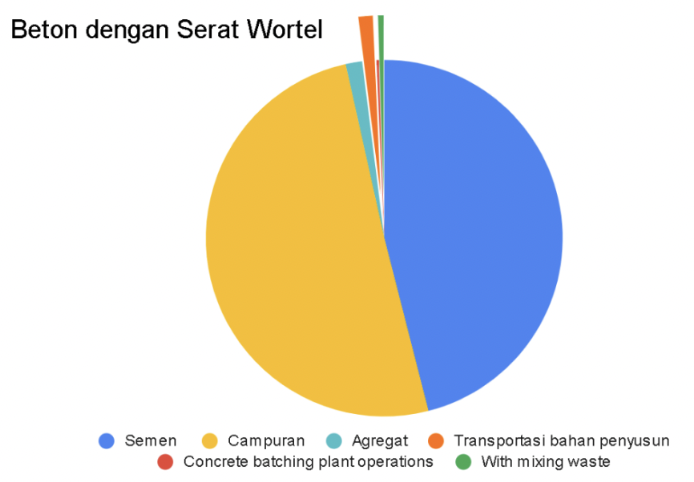
found in nature. One application of biomimicry is to deal with the problem of carbon emissions. In fact, building materials have a contribution to carbon dioxide (CO2) emissions. Commonly used building material and contribute to carbon emissions is cement, which further can be concrete. By the biomimicry approach, concrete material will have better quality and lower embodied carbon value.
Keyword: Biomimicry, Concrete, Carbon Emission, Embodied Carbon
Author: Priya Alfarizqi Baskara – Architecture