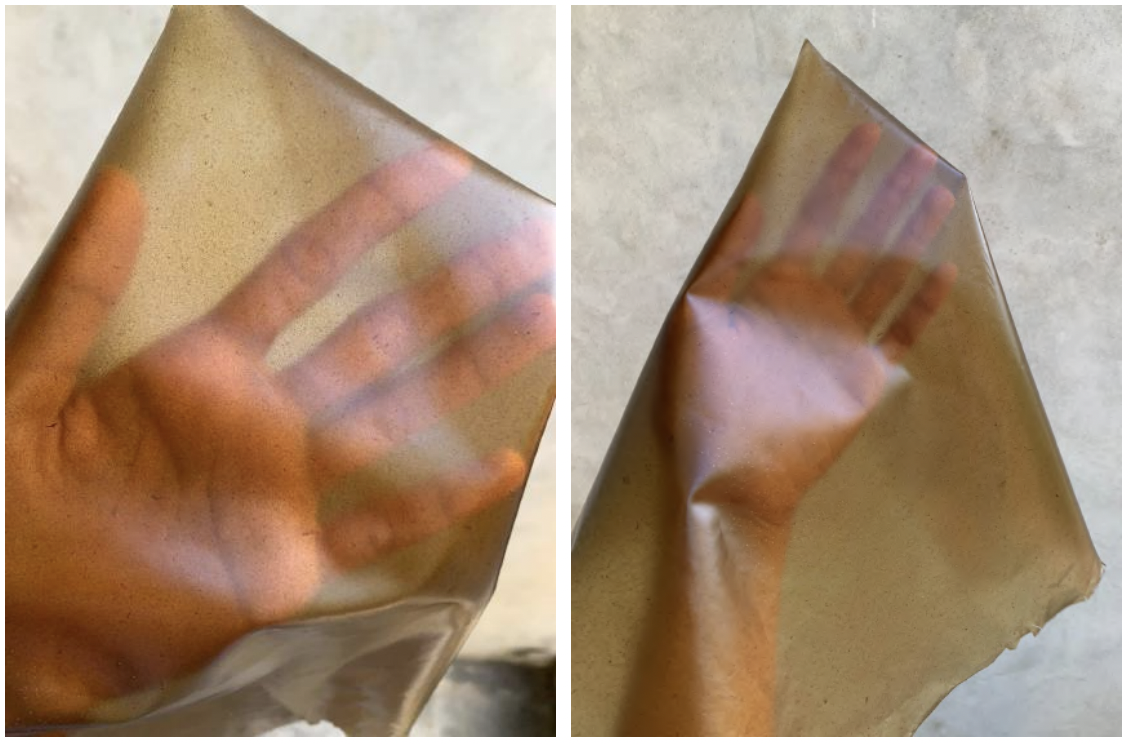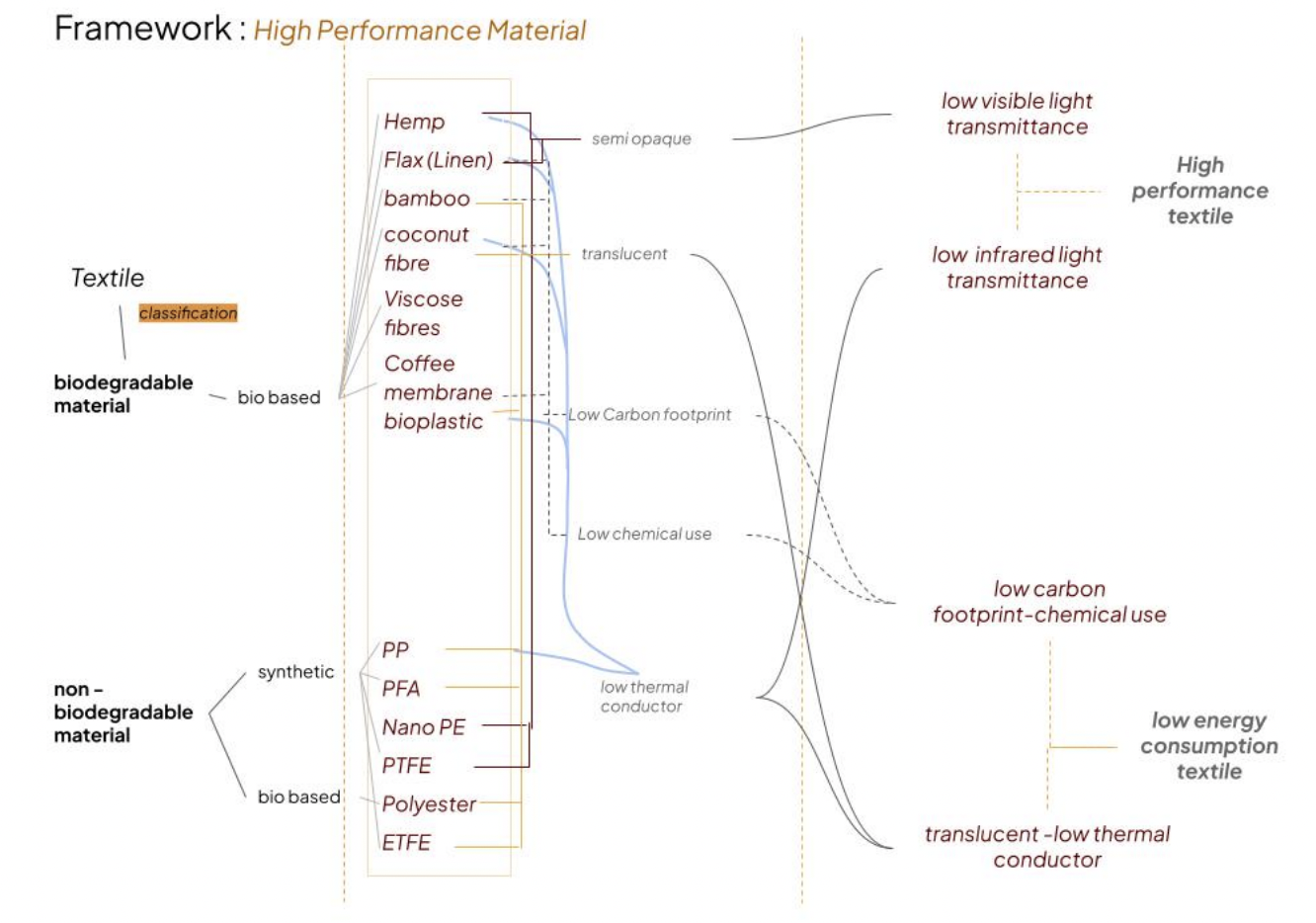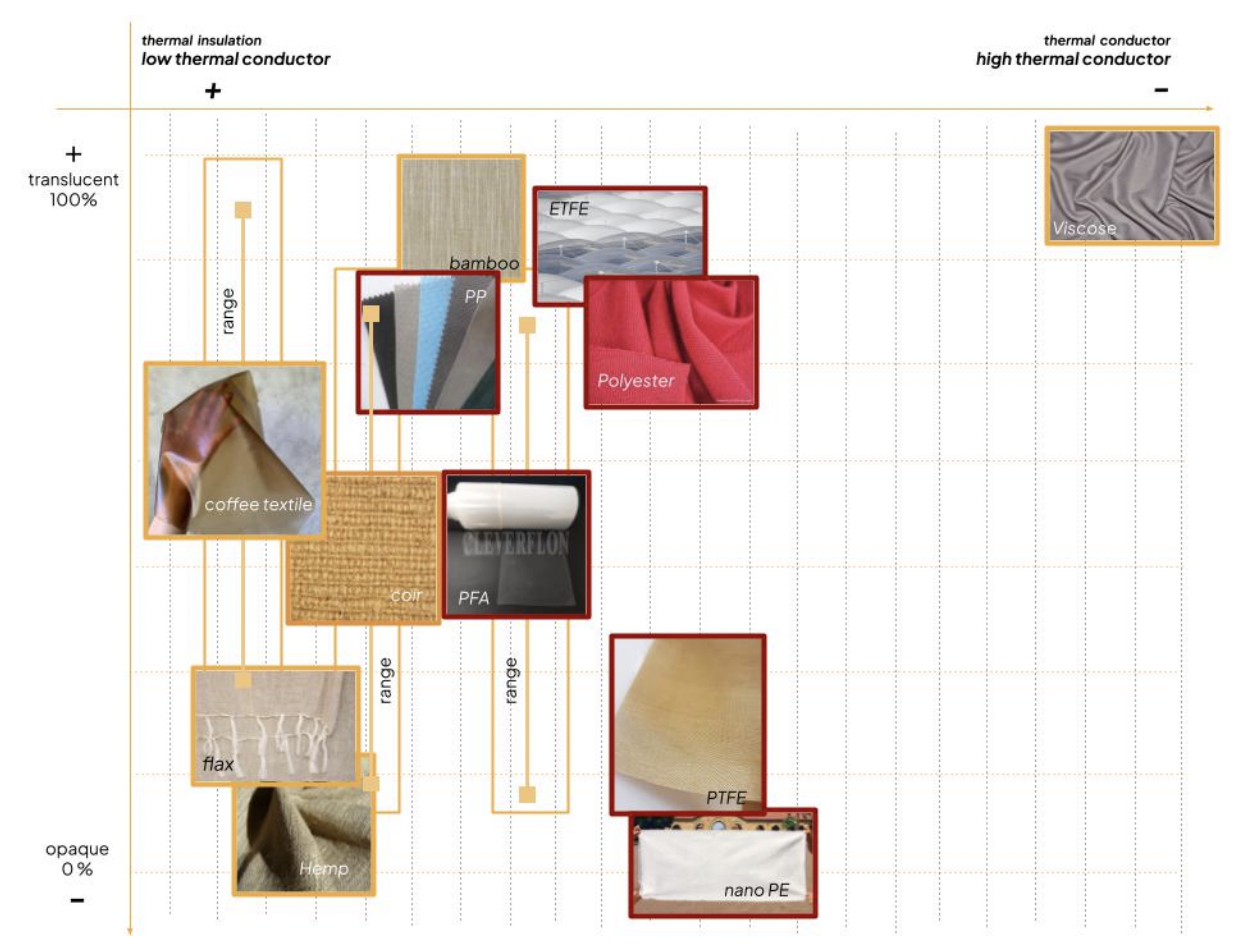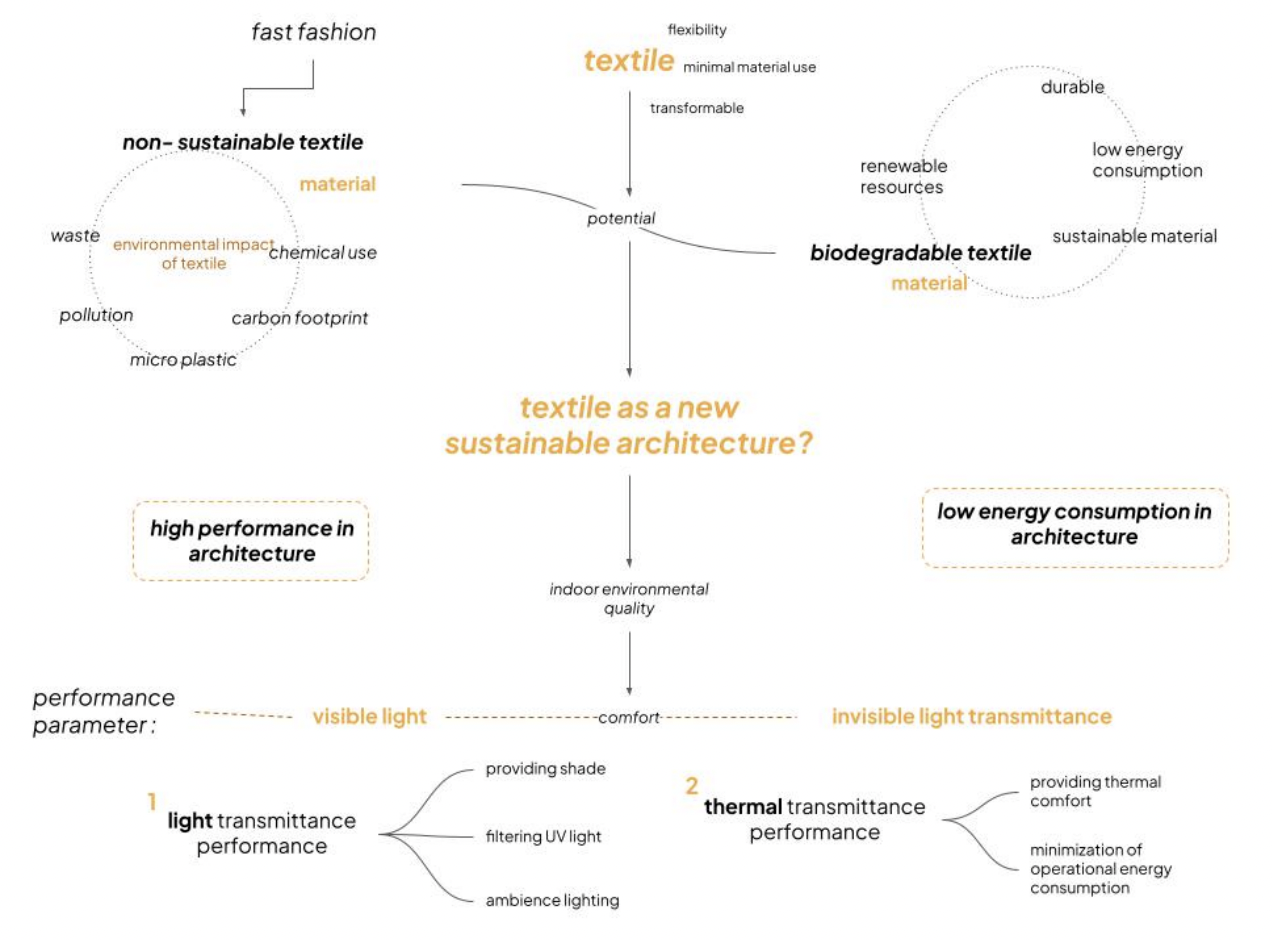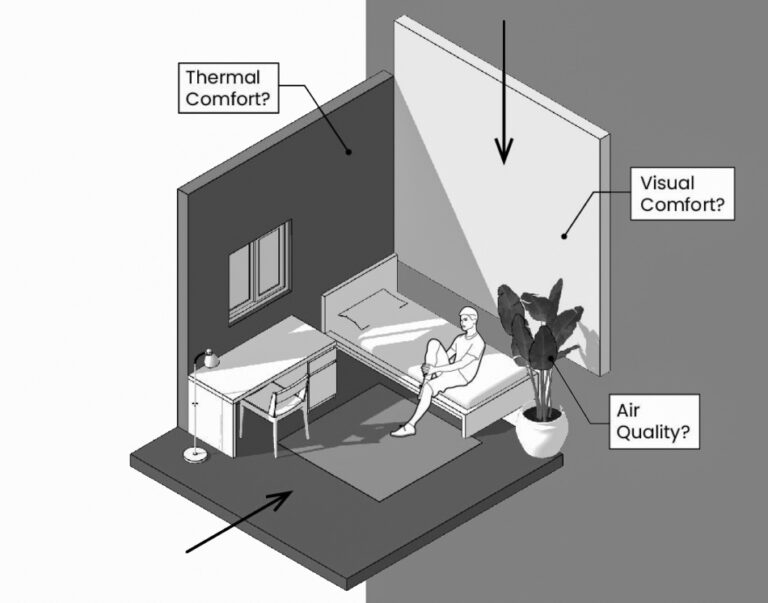
Conventional materials used in buildings are currently proven to have a negative impact on the environment by contributing to 40% of waste in landfills. This increases the urgency to build buildings that comply with sustainable parameters in buildings, especially by the use of material. In industry fashion, the problem of textile waste is overcome by the use of biodegradable textiles. Building and fashion actually have similarities, both are envelopes or enclosures in different social dimensions. Hence, the use of biodegradable textiles to overcome the problem of waste can also be used for sustainable building. However, the use of textiles in buildings is still dominated by non-biodegradable textiles, so biodegradable textiles are still lacking in studies on their performance in buildings. In fact, to build a sustainable building, one of the elements that need to be considered is the performance of the material for an indoor quality environment.
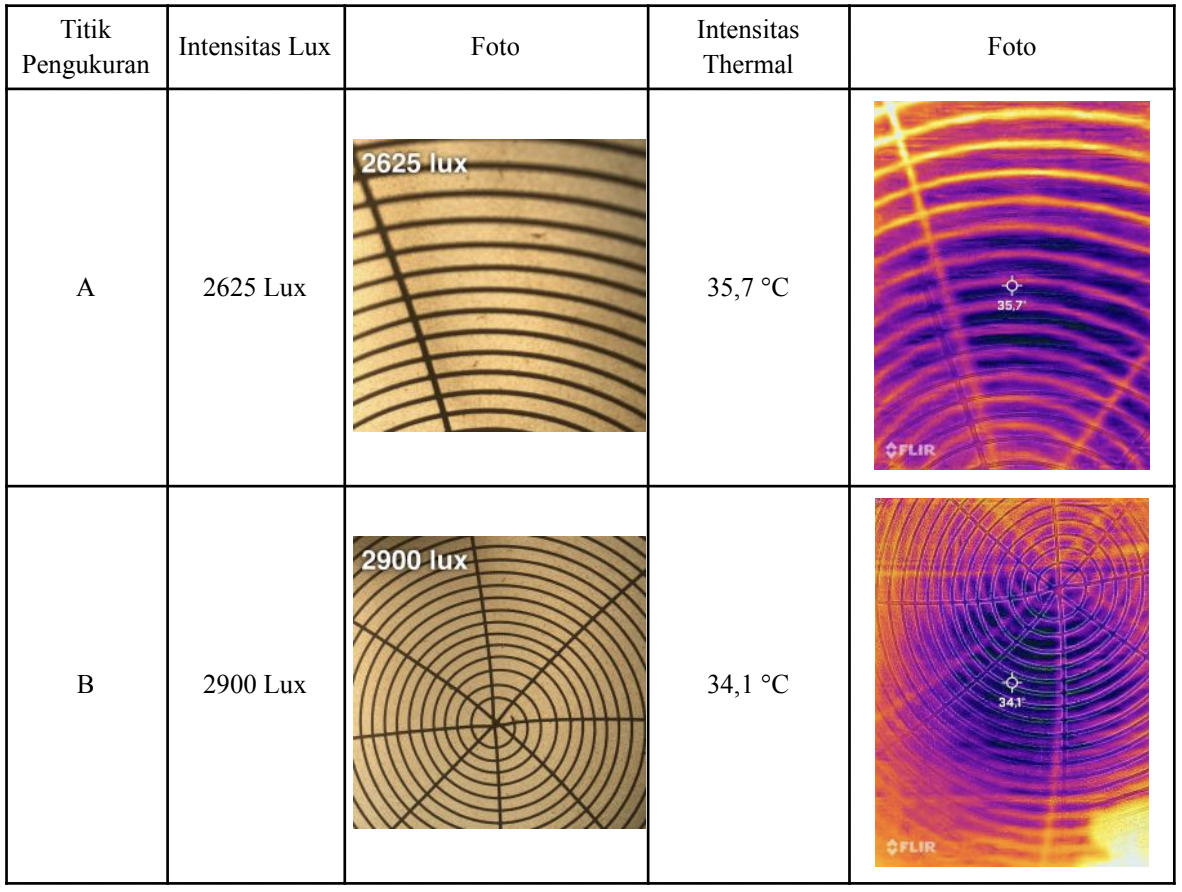
This writing aims to test biodegradable textile performances based on indoor quality environment parameters when used on building envelopes. Several innovations in fashion of biodegradable textile have good balancing thermal comfort performance on the wearer and have varying transparency, due to the characteristics of biodegradable textile that is porous with a high transmission value. Therefore, this study will examine the light transmittance values and infrared thermal against visual and thermal comfort standards.
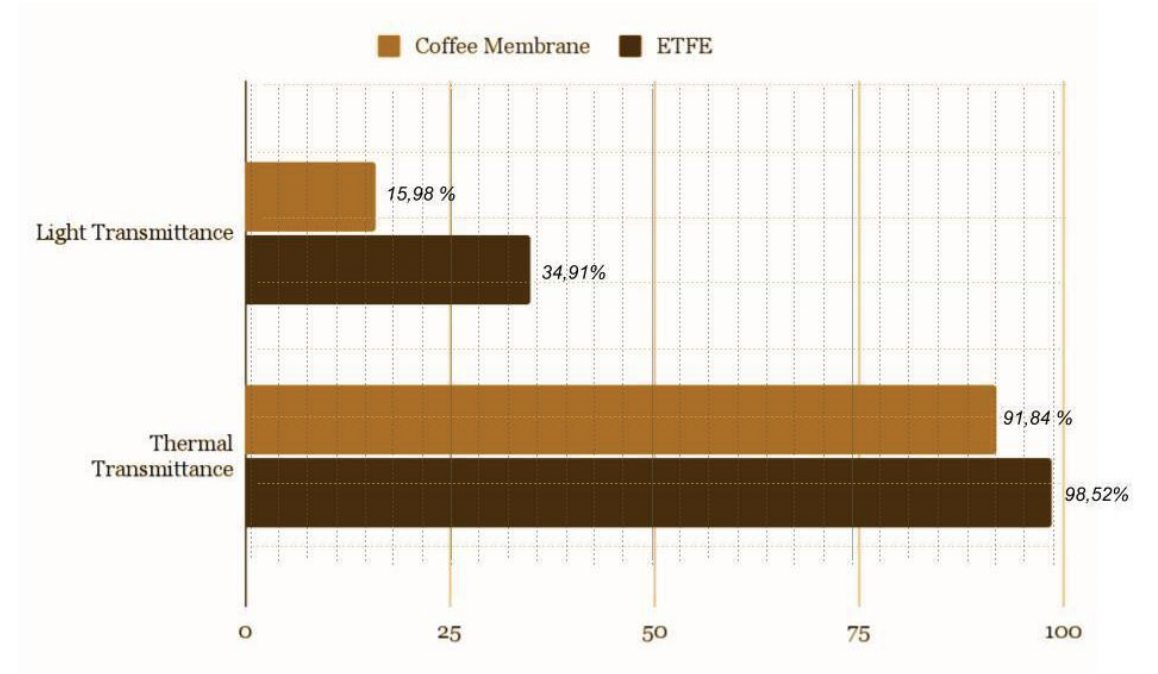
From the test results it was found that the biodegradable textile which is tested does not conform to thermal comfort ASHRAE due to too high thermal transmittance. However, biodegradable textile has better performance than non-biodegradable textile to lower the room temperature. Meanwhile, light transmittance value on biodegradable textile does conform to the visual comfort standard SNI. Even so, the potential for biodegradable textiles still needs to be further developed for its use on building enclosures.
Keywords: biodegradable textile, sustainable material, light transmittance, infrared thermal transmittance , visual comfort, thermal comfort
Author: Tuhfah Hanifah – Interior Architecture