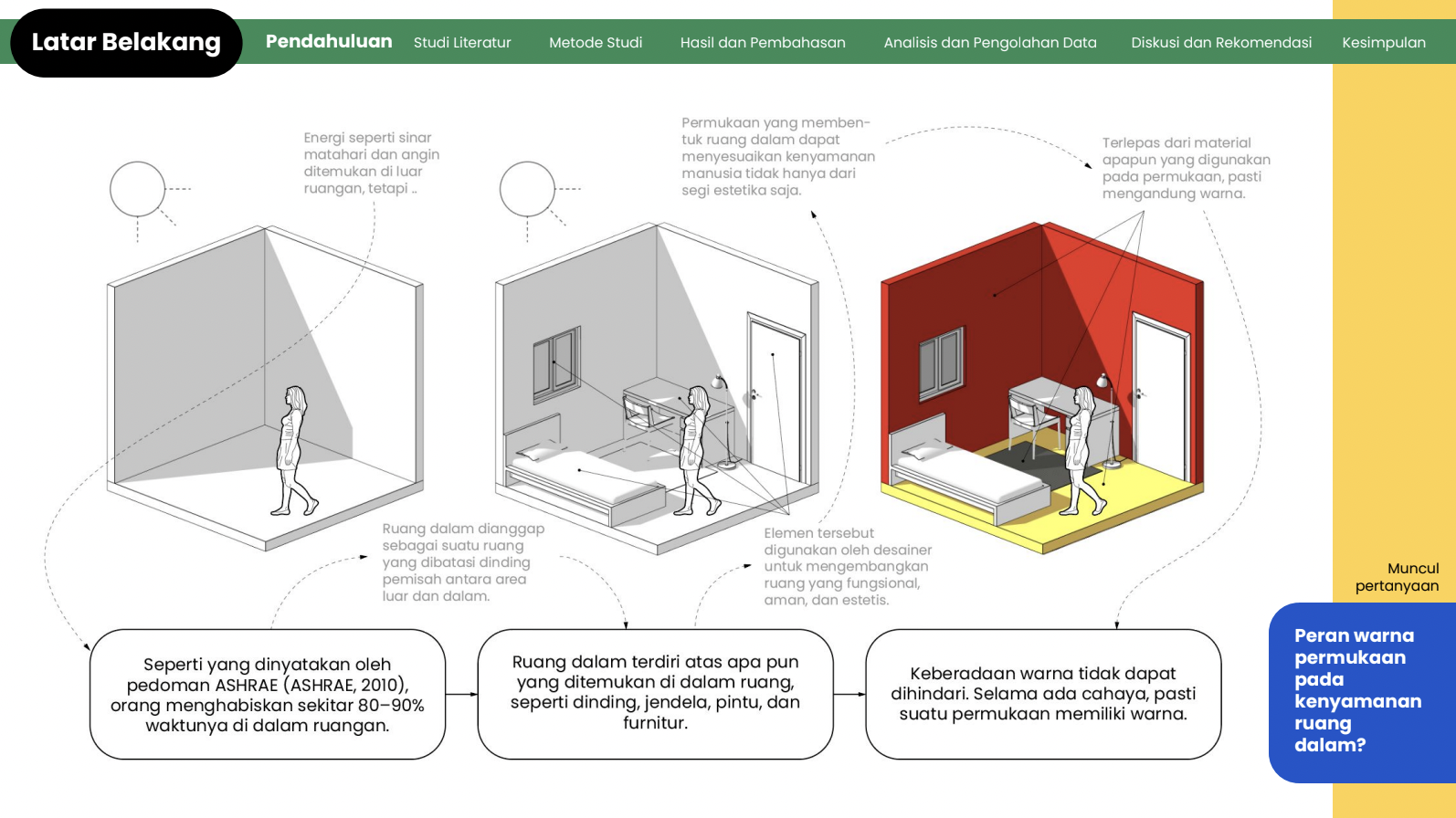
Color is an element used by architects and interior designers in designing a space. Color is important because color is found in every object, including on the surface of a room. If used properly, the color on the surface of the room not only provides aesthetic value but can also have an impact on lighting and temperature of a room.
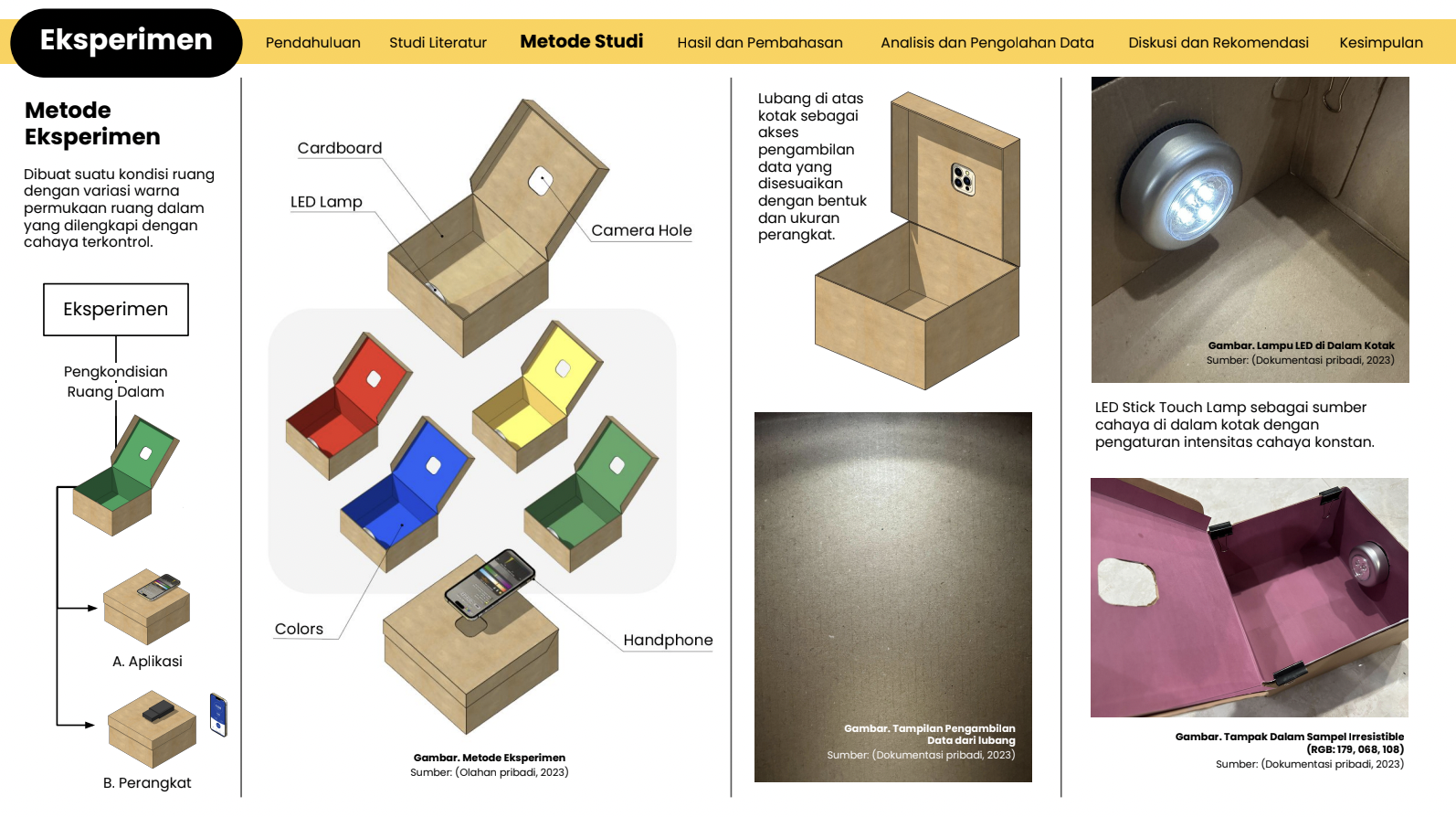
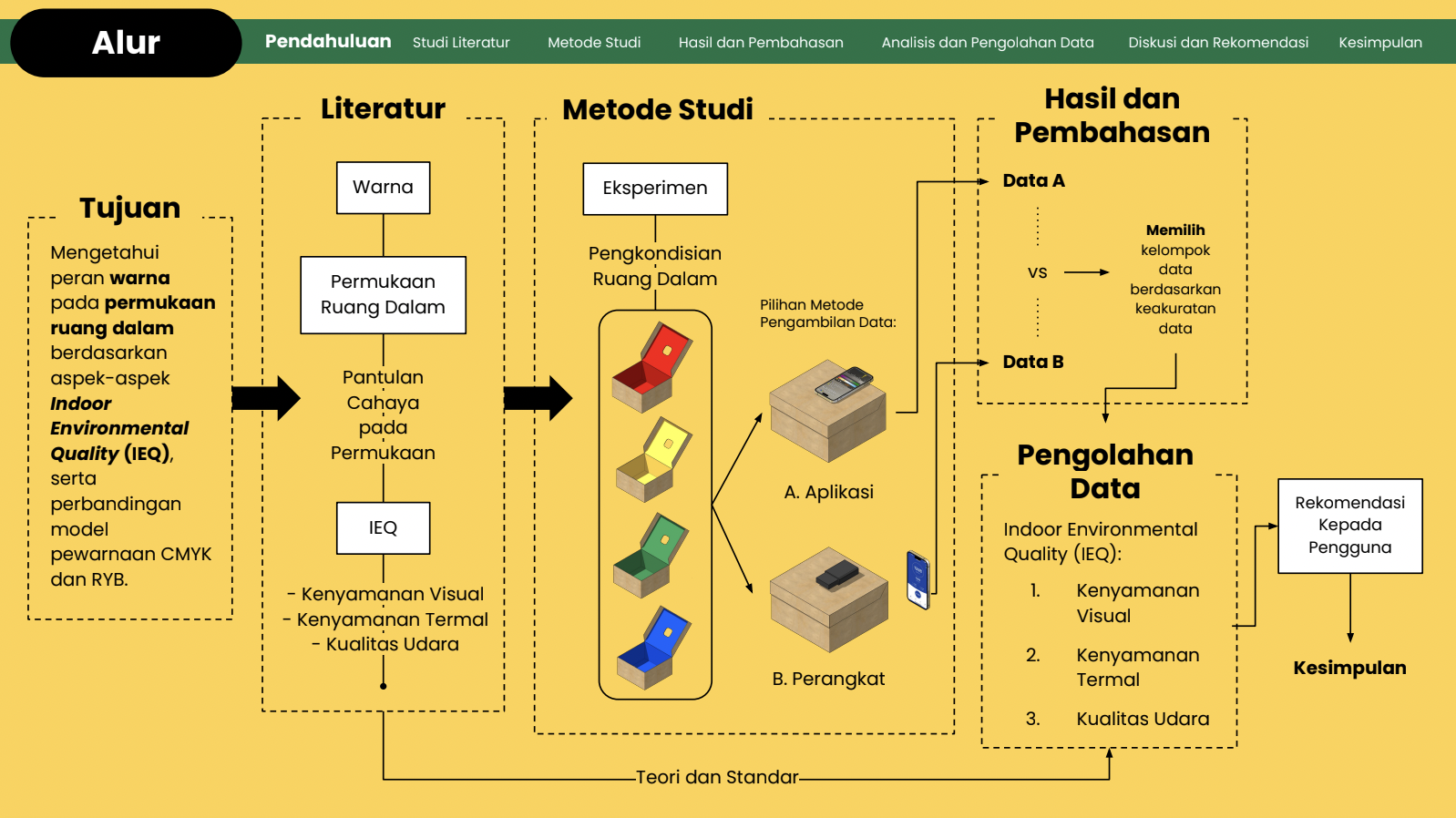
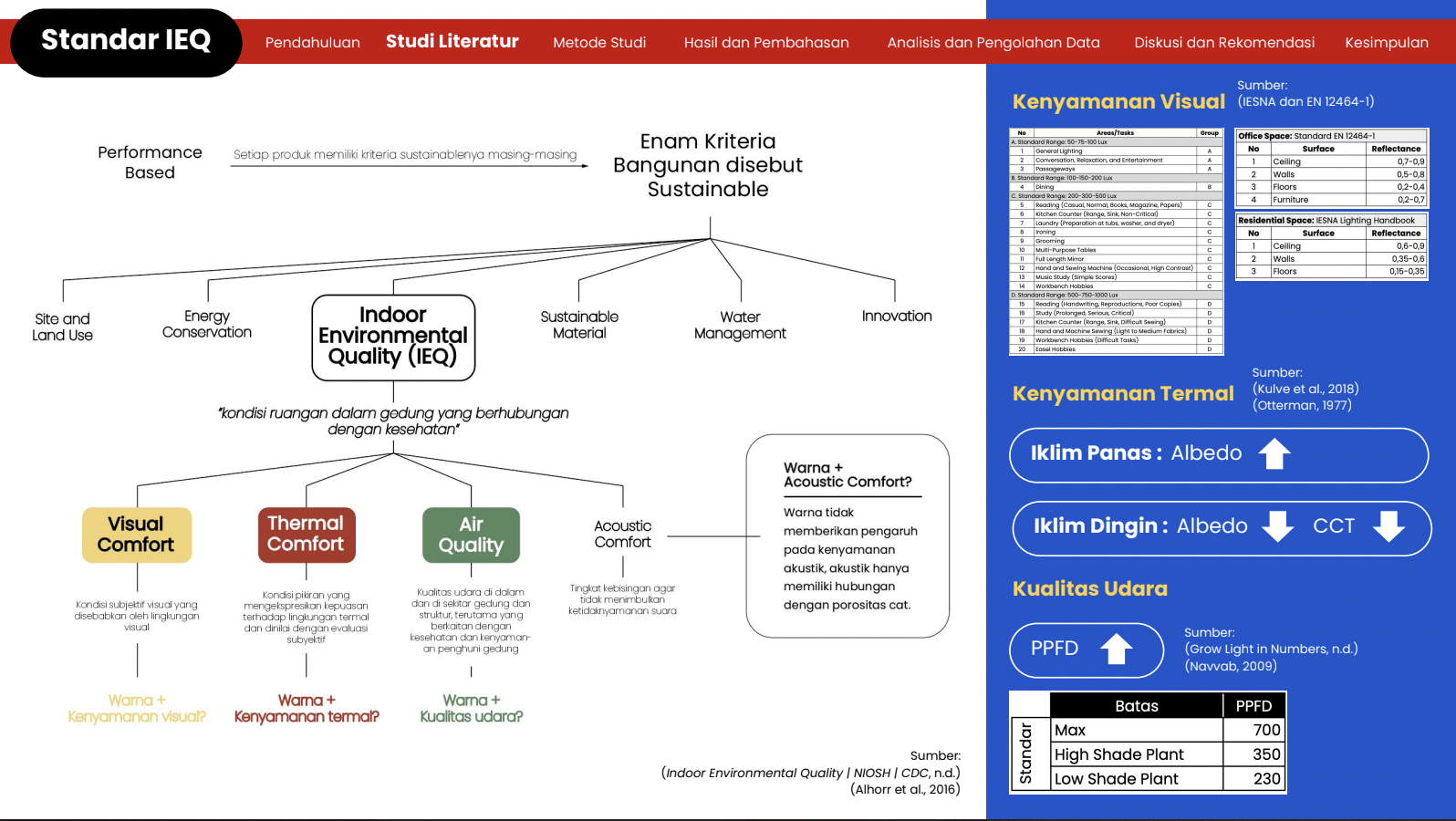
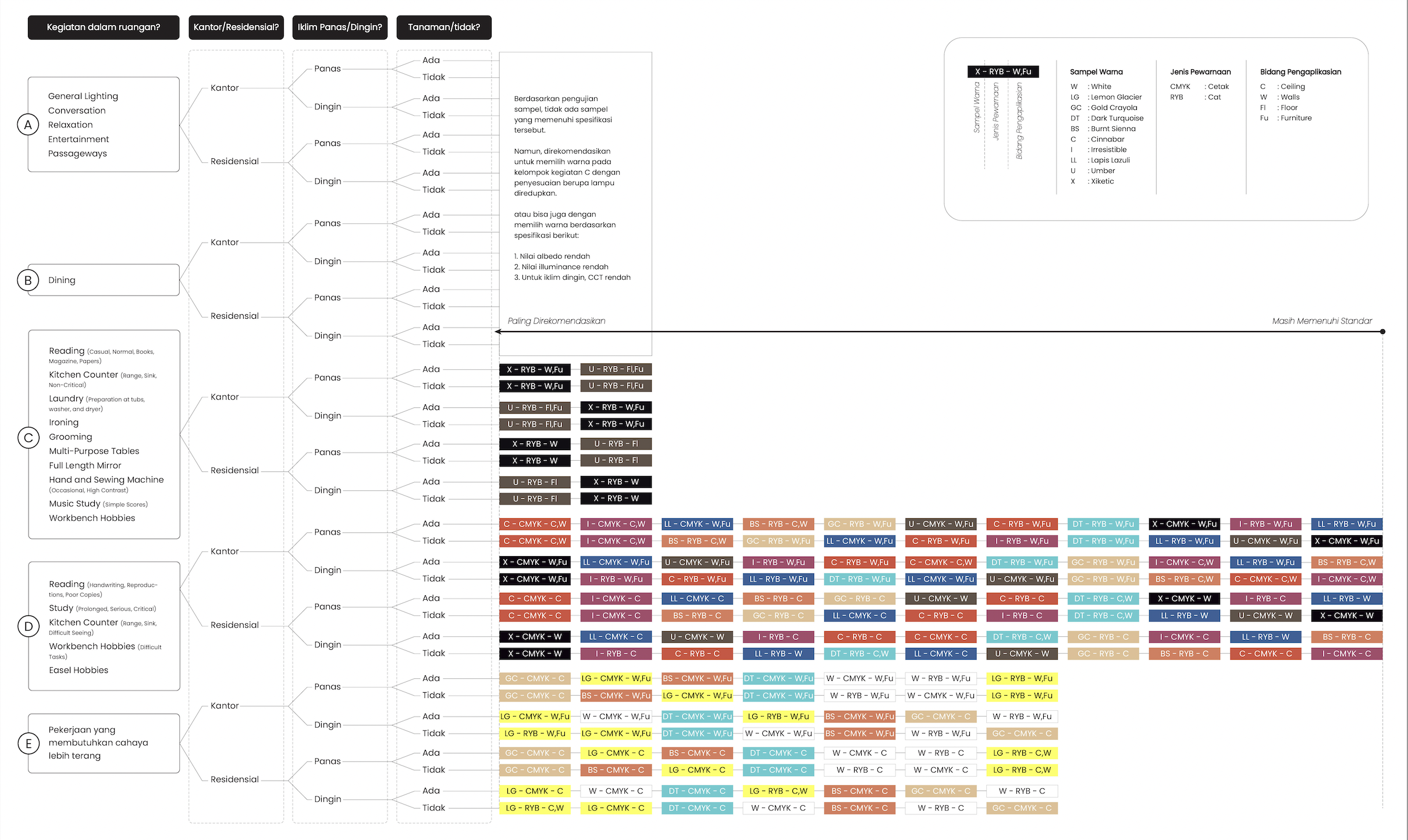
This thesis aims to determine the performance of the surface color of a room that meets the quality standards based on Indoor Environmental Quality (IEQ). The IEQ assessment is based on visual comfort, thermal comfort, and air quality. The method used in this paper is experimentation and data processing. The experiment is in the form of a room model in the form of a box. The color of the surface inside the box can be varied with controlled light intensity. The value data obtained from the experiment was processed based on the points adjusted for the parameters of visual comfort, thermal comfort, and air quality. Experimental results and data processing show that the best color that meets IEQ standards does not consist of just one color, but the performance of a color is very dependent on the conditions of space requirements and based on what parameters the color is assessed. The exact color of the surface of the room can be known by completing some user information such as the activities in the room, the type of room, the climate the room is in, as well as information about the presence of plants in the room.
Keywords: Color; indoor surface; Indoor Environmental Quality (IEQ)
Author: Hayfa Farhah – Interior Architecture