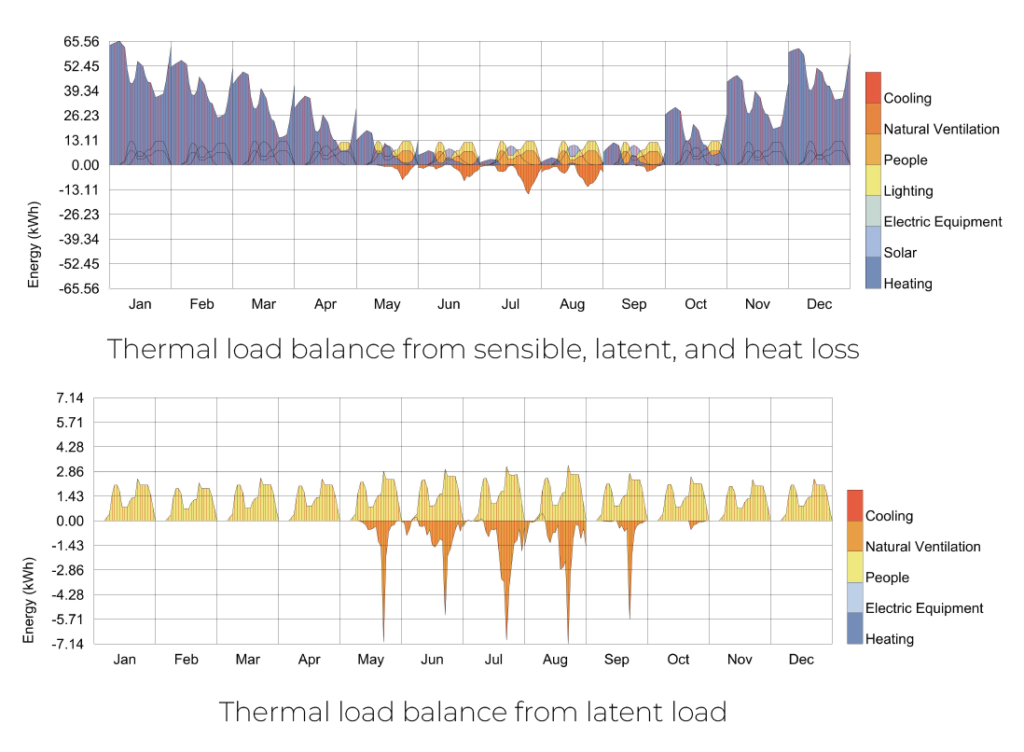
Buildings are among the largest energy consumers and have a substantial impact on energy use. This consumption is affected by passive design elements like window openings, shading, and materials, along with active design components such as HVAC systems and artificial lighting. Decisions about passive and active design factors are crucial during the initial design phase, emphasizing the significance of early energy analysis in the building design process. Key parameters necessary for energy simulations include:
- Building mass featuring window openings and shading
- Types of materials used
- Weather data
- Settings for natural ventilation
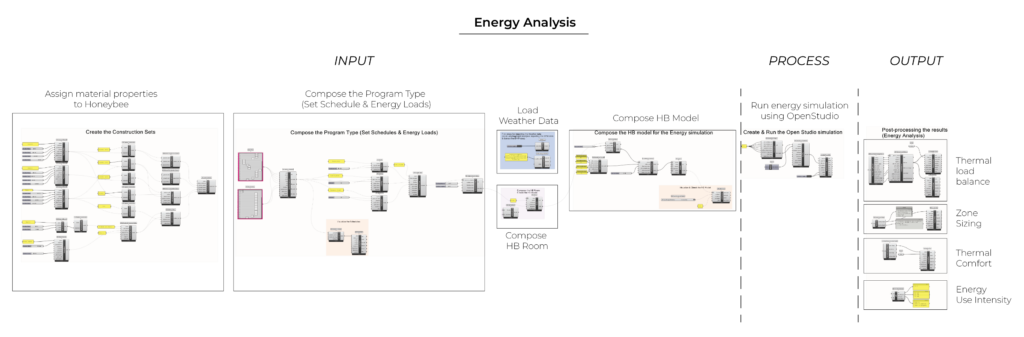
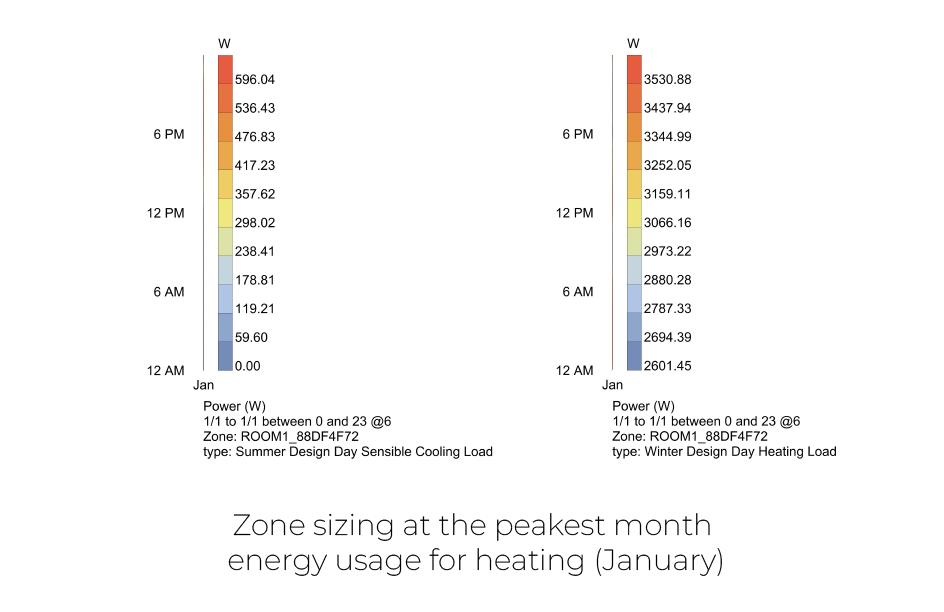
Energy simulation is commonly performed using a digital tool known as Grasshopper alongside its Honeybee plugin. These simulations cover various aspects including thermal load balancing, zone sizing, thermal comfort, and energy use intensity. Thermal load balancing demonstrates the energy utilized for heating or cooling within a year or a specific timeframe. On the other hand, zone sizing determines the peak month of heating or cooling load in a year to ascertain the suitable HVAC size. Thermal comfort provides a graphical representation of the thermal comfort level in a room throughout a period oft time while energy use intensity illustrates the energy consumption per square foot per year.
Through the utilization of energy simulation, diverse parameters can undergo testing to identify the most effective shape or geometry for a building facade. This data can then be utilized to create window and shading variations or enhance the building’s overall performance. Material variations also play a role in influencing the outcomes of energy simulations.