An integrated computational method for calculating dynamic thermal bridges of building facades in tropical countries-NC-ND license

Author: 

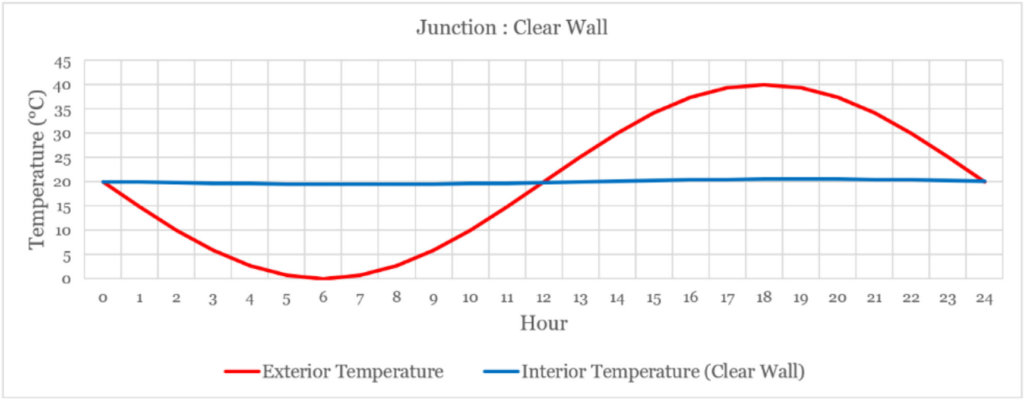
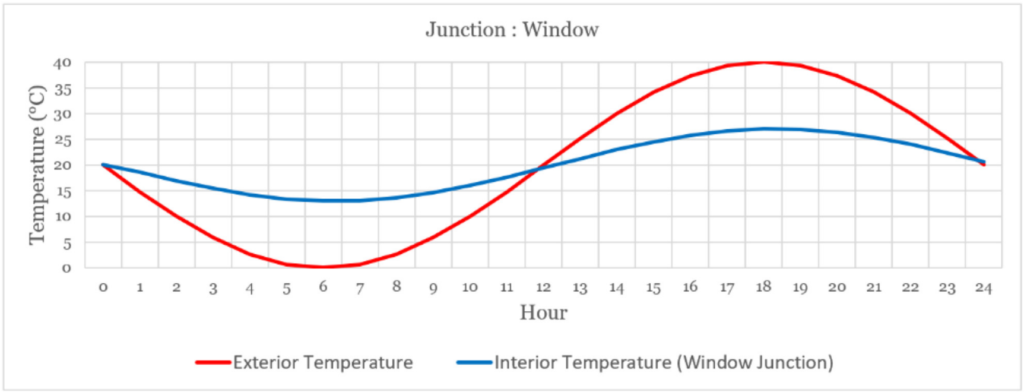
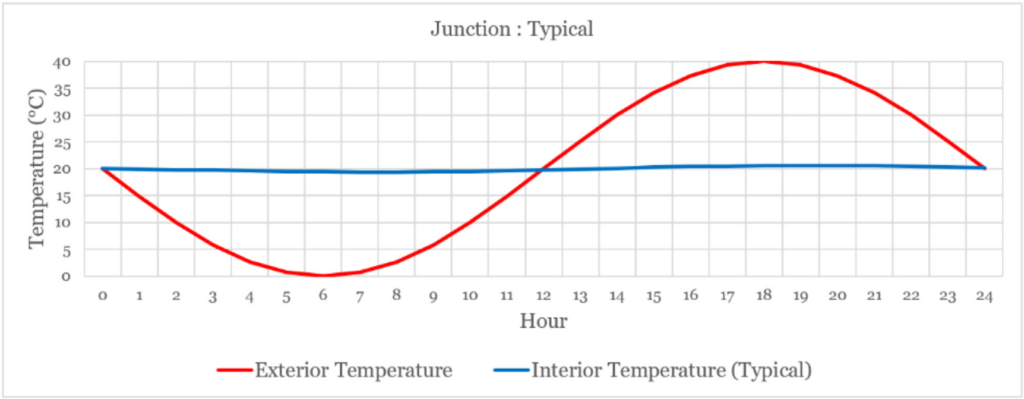
Identifying thermal bridges on building facades has been a great challenge for architects, especially during the conceptual design stage. This is not only due to the complexity of parameters when calculating thermal bridges, but also lack of feature integration between building energy simulation (BES) tools and the actual building conditions. For example, existing BES tools predominantly calculate thermal bridges only in steady state without considering the temperature dynamic behaviour of building outdoors. Consequently, relevant features such as thermal delay, decrement factor, and operative temperature are often neglected, and this can lead to miscalculation of energy consumption. This study then proposes an integrated method to calculate dynamic thermal bridges under transient conditions by incorporating field observations and computational simulations of thermal bridges. More specifically, the proposed method employs several measurement tools such as HOBO data logger to record the actual conditions of indoor and outdoor room temperature and thermal cameras to identify the surface temperature of selected building junctions. The actual datasets are then integrated with the simulation workflow developed in BES tools. This study ultimately enables architects not only to identify potential thermal bridges on existing building facades but also to support material and geometric exploration in early design phase
This research is funded by the Directorate of Research and Development, Universitas Indonesia under Hibah PUTI Q1 batch 2 2022 (Grant no. NKB-1149/UN2.RST/HKP.05.00/2022)

This research is published in Frontiers of Architectural Research
more insights

The Sound Environment as Taste Perception Moderator of Healthy Food and Beverage: Multisensory design of fruit juice drinking experiment

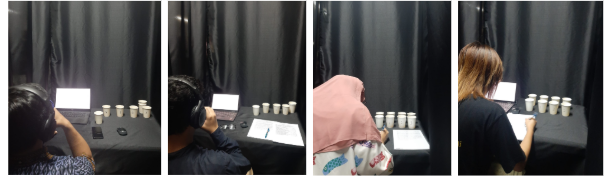
Funders: Directorate of Research and Development – PUTI Q1 UIYear : 2024Quantity: IDR 150.000.000Miktha Farid Alkadri (Principal Investigator) PROJECT DESCRIPTION This research explores how multisensory design—particularly acoustic environments—can influence the taste perception of low-sugar fruit juices. While sound is often overlooked in dining settings, studies have shown that background noise

Read more >

Documenting the cloud paradise Wae Rebo Vernacular houses, Manggarai, Indonesia

Funders: EWAP – Oxford BrookesYear : 2023Quantity: EUR 150,000Research Member (Architecture Team): Miktha Farid Alkadri, Yuliana, Stephanie Aylien Jonatan PROJECT DESCRIPTION This project aims to digitally preserve the traditional Mbaru Niang houses in Wae Rebo and Todo Villages, Flores, Indonesia—iconic conical structures that reflect deep cultural and environmental values. By

Read more >

CROFOLOGY: Coral Reef Fabrication Technology

Funders: Directorate of Research and Development – PUTI Q1 UIYear : 2024Quantity: IDR 150.000.000Research Member (Architecture Team): Miktha Farid AlkadriHeidy Sekardini, Ricky Purbaya, Stefanie Aylien Jonatan, Alya Widha Aurellia PROJECT DESCRIPTION CROFOLOGY is a research-based design project that explores digital fabrication technologies for coral reef restoration. By combining marine ecology,

Read more >

Research Cluster of Architectural Sciences and Building Technology (ASBT)

Department of Architecture

Faculty of Engineering

University of Indonesia

Get In Touch

Copyright © 2025 - PAR-Lab