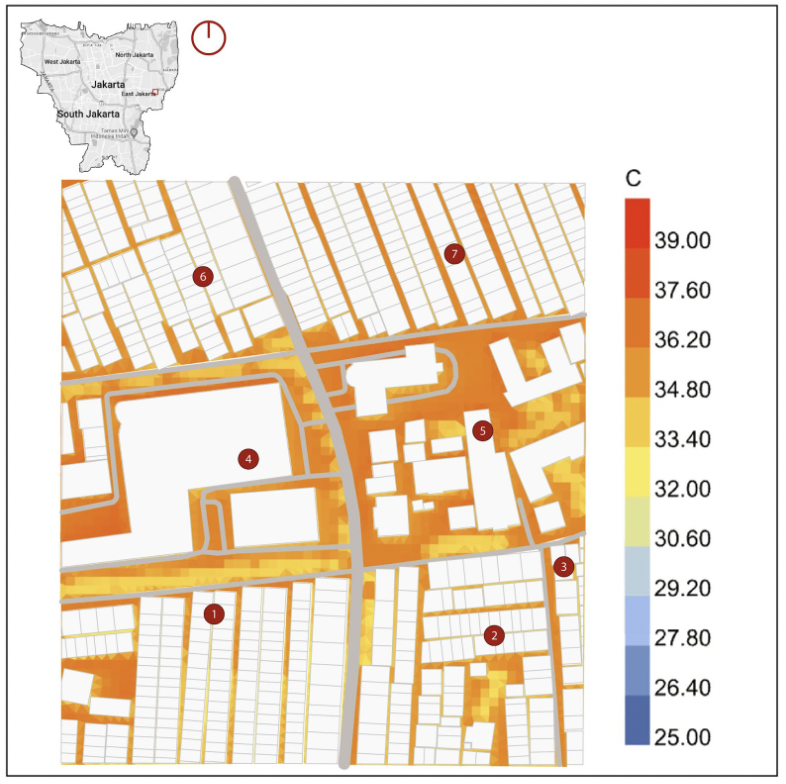
Urban Heat Island (UHI) is a phenomenon of urban thermal increase which can affect urban thermal comfort, damage to air circulation, adverse effects on human health, and even death. Therefore, it is necessary to study the factors that cause high urban thermals and ways to overcome and prevent this.
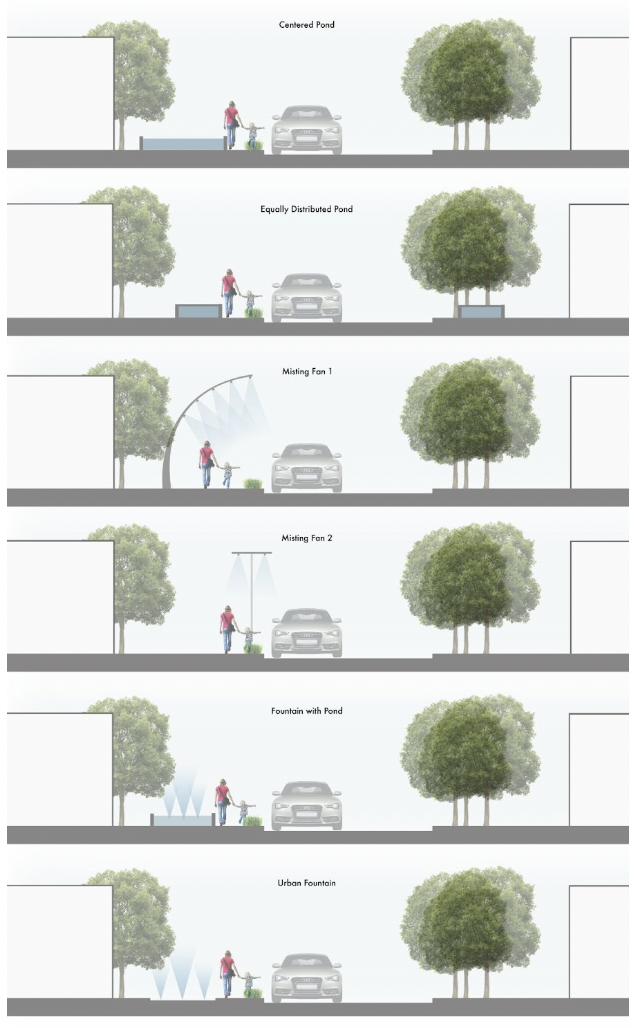
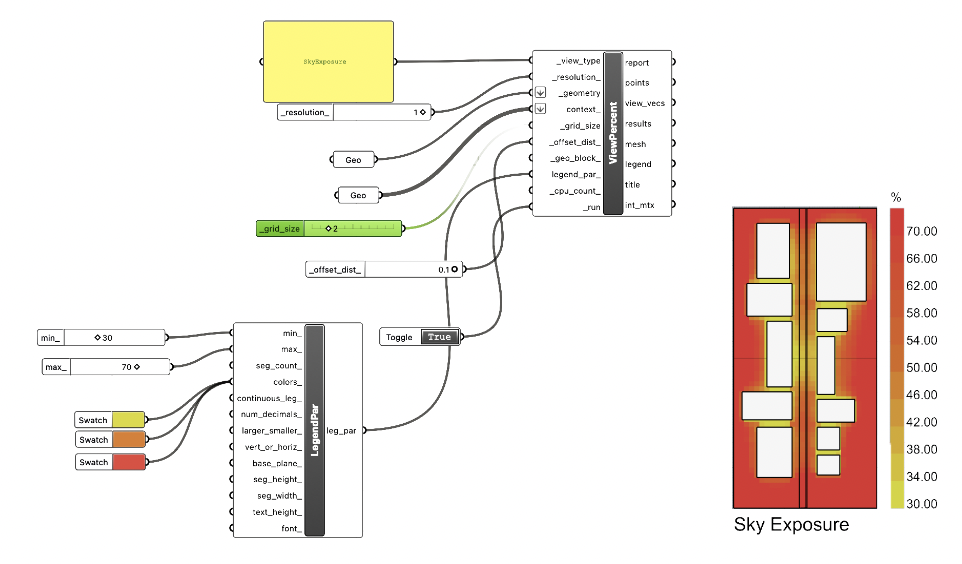
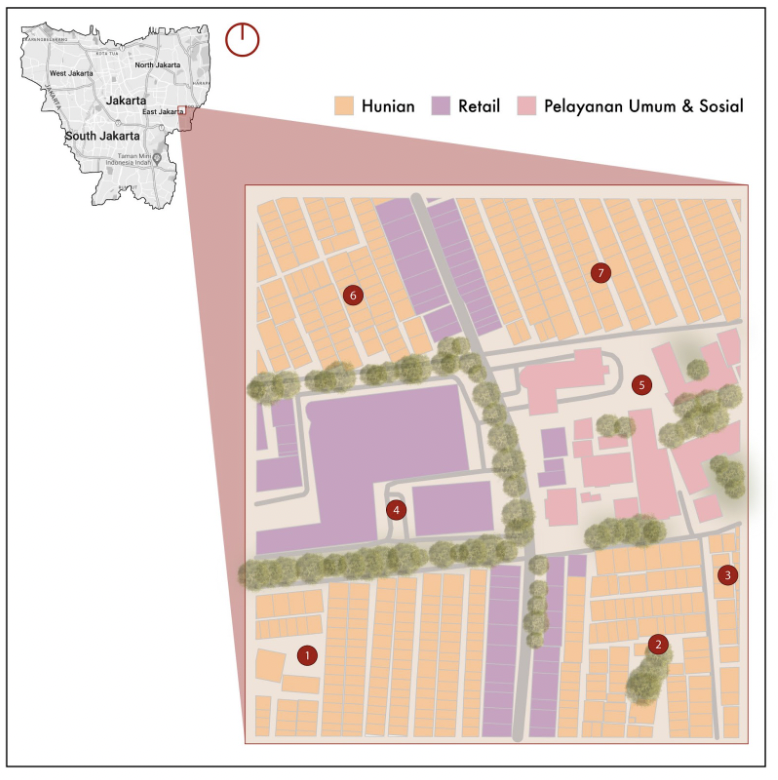
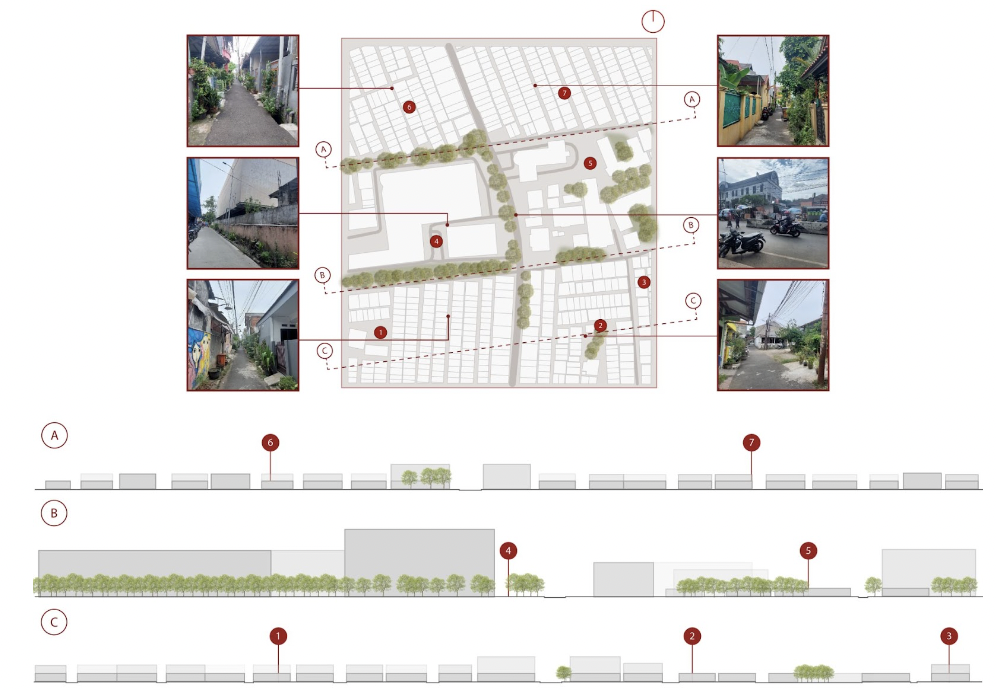
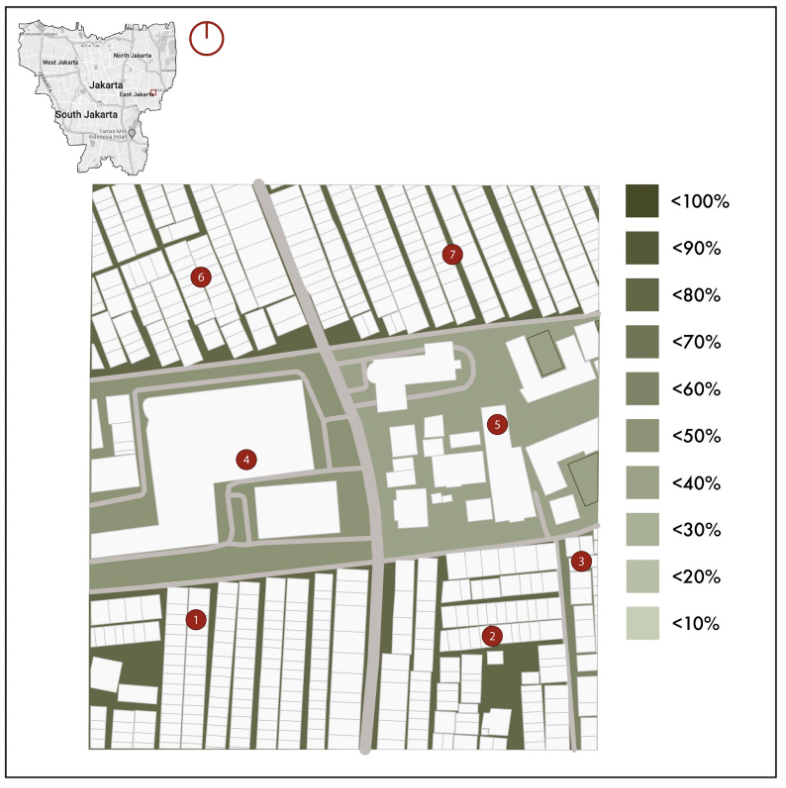
This thesis discusses one of the strategies to mitigate the high urban thermal, namely the use of water bodies in urban areas. The application of water bodies will be related to the urban morphology as the main factor of the urban’s high thermal and become a physical factor of water bodies. The methods used in this thesis are calculation and simulation to obtain data regarding urban morphology and urban thermal values prior to application of water bodies and after. Calculation and simulation results from several samples of urban areas will be compared to see which factors are more influential and their effect on the application of water bodies in each area.
The results of the thesis state that factors from the urban morphology can affect the high of urban thermal and water bodies can reduce the urban thermal. The high reduction value of water bodies is influenced by the high dimensions of the water bodies, but the dimensions of the water bodies are affected by the availability of existing land in the city area and this is due to the density of existing buildings. Based on this, urban planning needs to be accompanied by thoughts on outdoor thermal comfort such as the placement of several water bodies to achieve the outdoor thermal comfort t standards.
Keywords: Water Bodies, Urban Morphology, Outdoor Thermal Comfort
Author: Adelia Febiyanti – Architecture