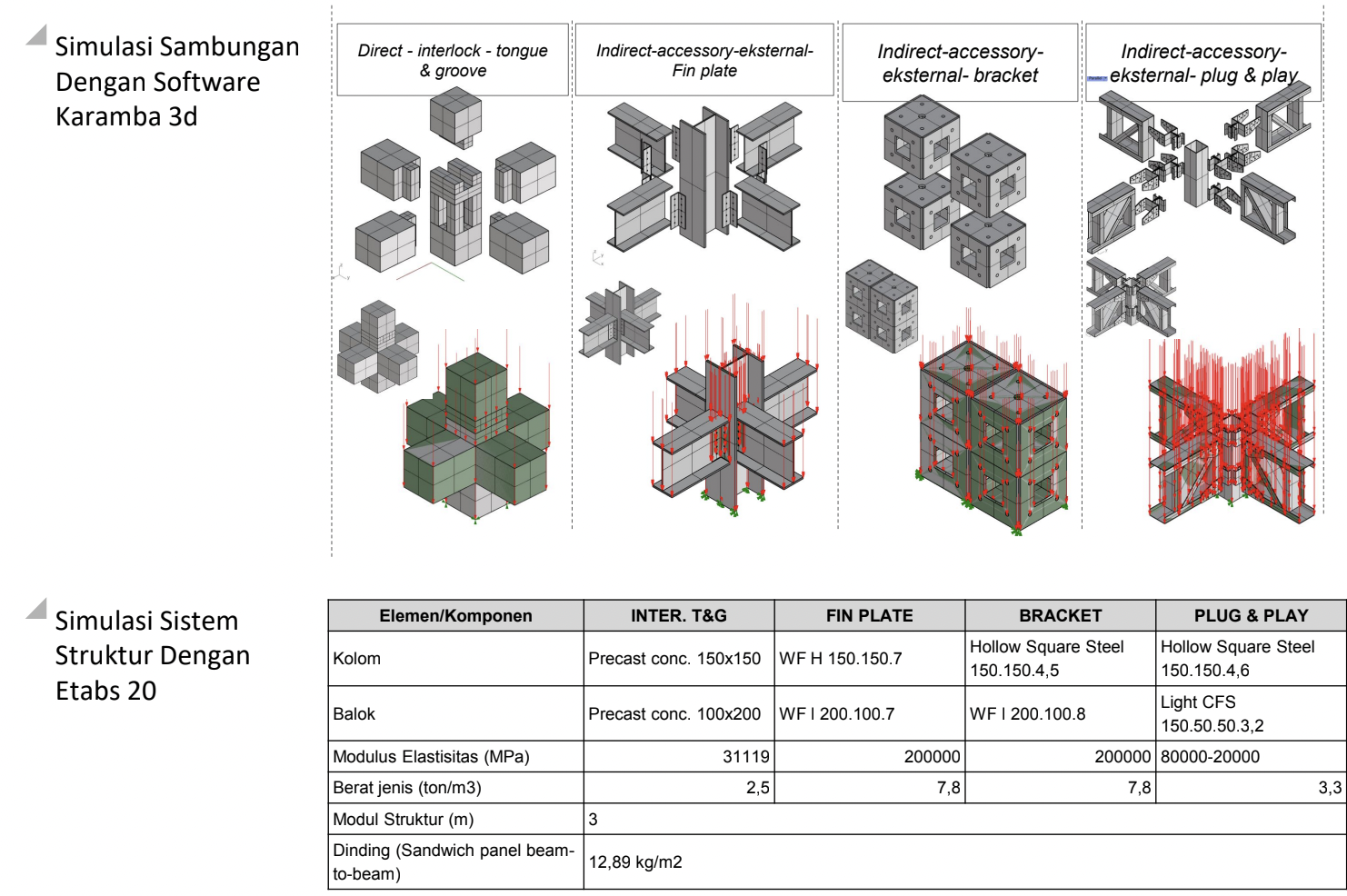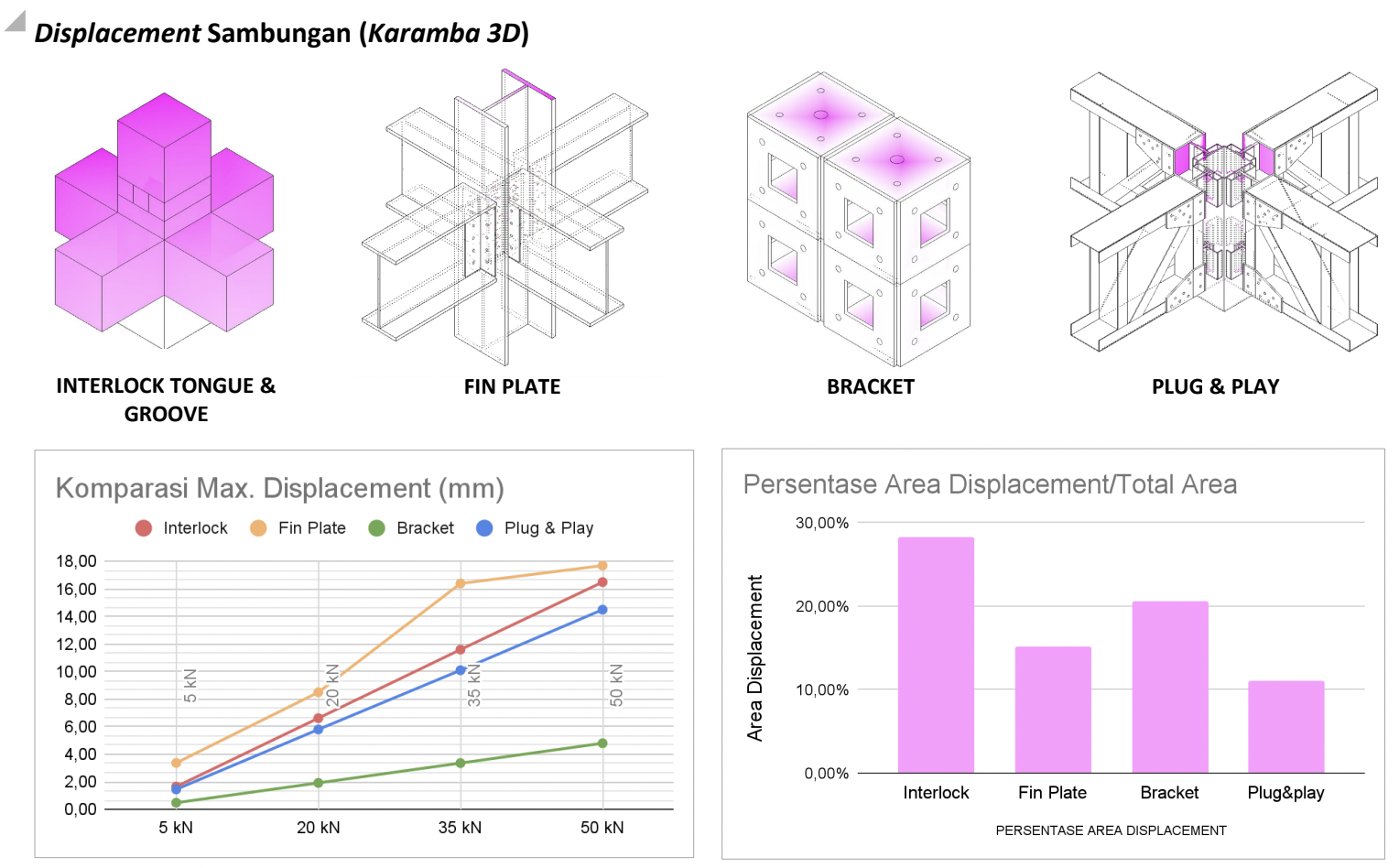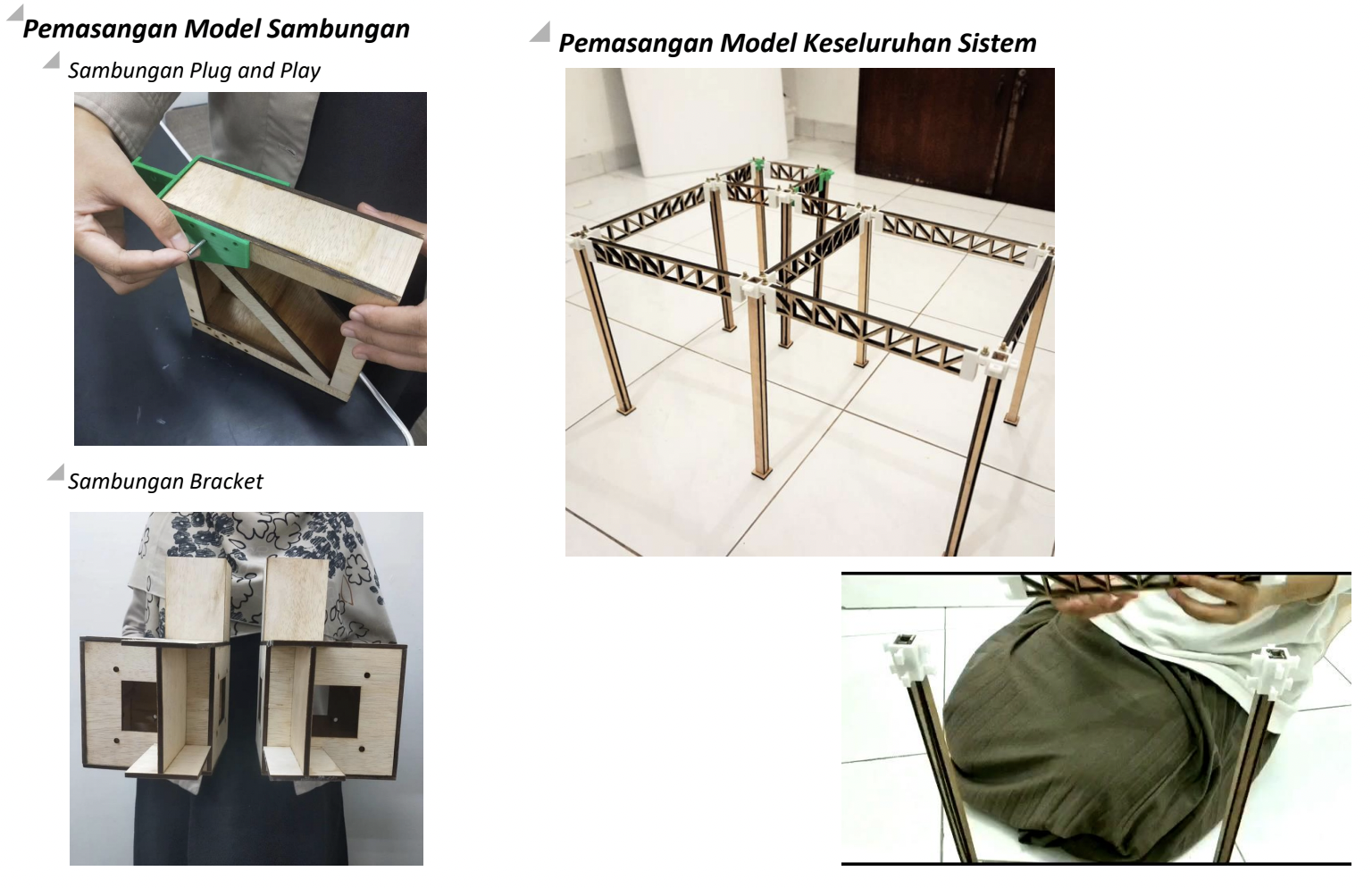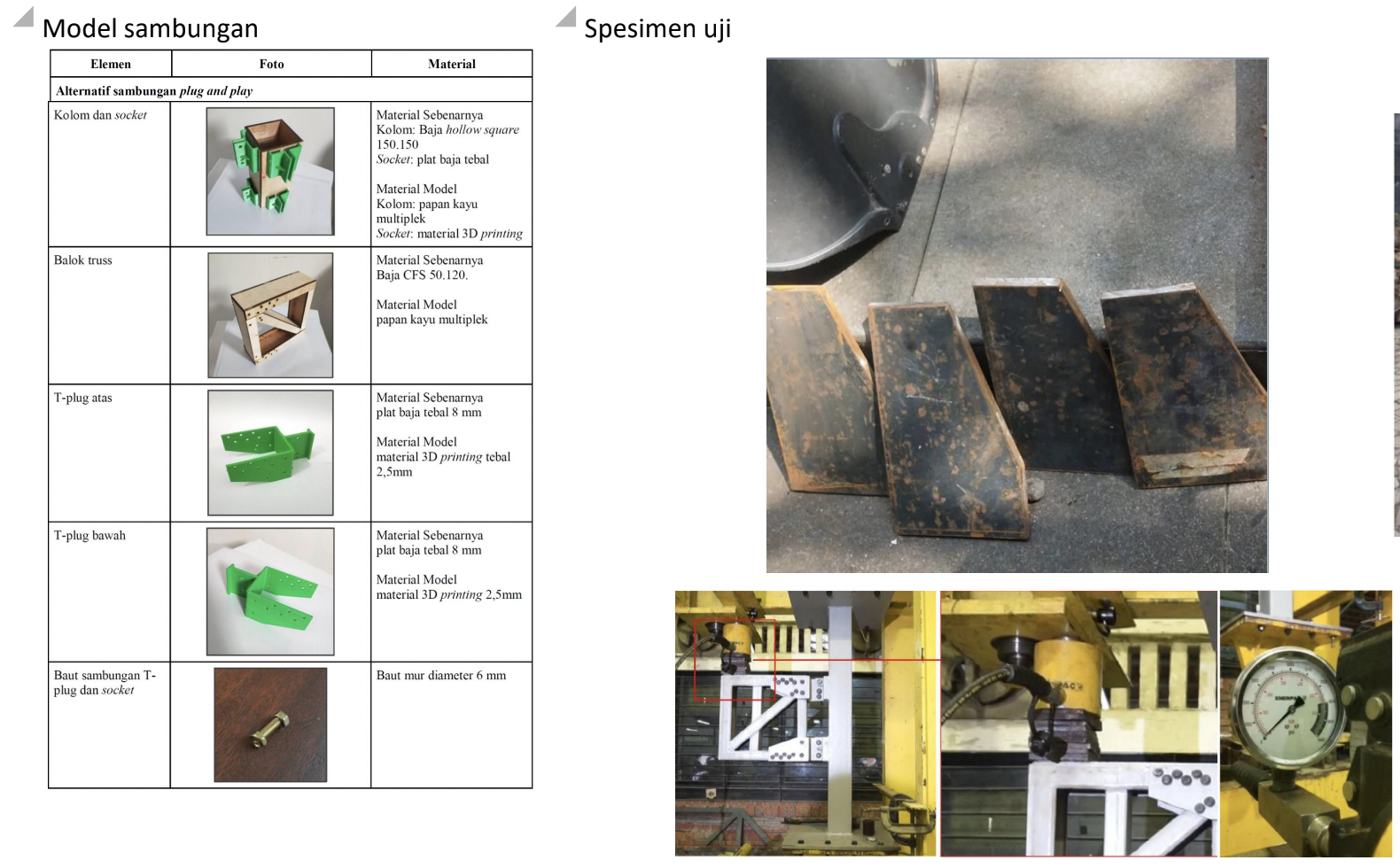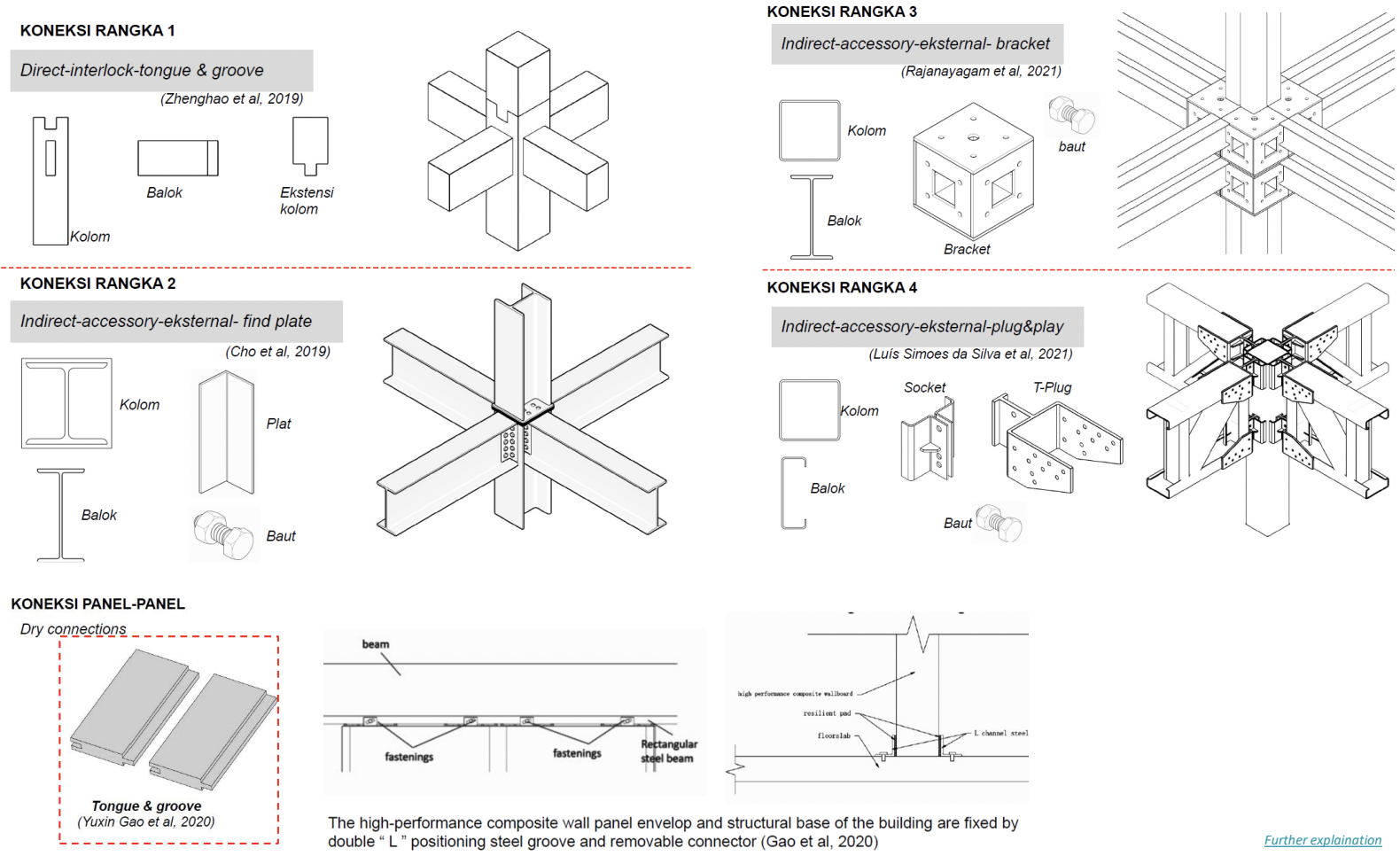
The increase in housing backlogs and households demands incremental housing development that can adapt to households’ changing needs. The incremental house construction issues include prolonged construction duration and the occupant’s flexibility to expand independently. Therefore, this study aims to develop incremental house construction to be flexible and sustainable. Prefabricated construction has the potential to reduce construction duration and increase materials and assembly efficiency so as to help minimize construction waste. This study conducts two experiment steps. The first step is experimenting with four types of connection systems as the frame elements (direct-interlock, fin plate, bracket, plug and play) along with the skin elements (walls, floors, roof) through digital model and simulation. The second step is experimenting with the determined system through assembly-disassembly models and specimen loading test. Parameters for flexibility are adaptability, structural strength, construction time, and reduced on-site construction waste potential. It results in the semi-volumetric prefabrication system that combines frame and panels with plug and play frame connection type has highest assembly-disassembly efficiency, lowest waste estimation, most sturdy, and shorter construction time. This can enrich the construction alternatives to improve the flexibility and sustainability of incremental house construction.
Keywords: assembly-disassembly, incremental housing, prefabricated construction, semi-volumetric, sustainable construction
Author: Viata Viriezky – Architecture